Barnes House Clearance — Recycling and Sustainability Commitment
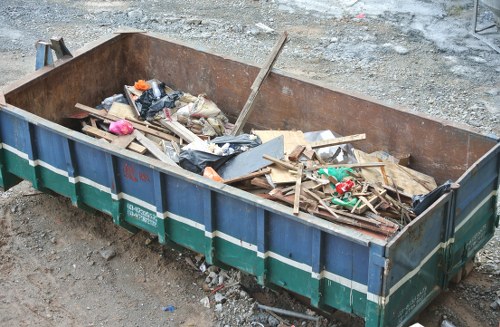
At Barnes House Clearance we place recycling and sustainability at the heart of our house clearance services. Our approach to an eco-friendly waste disposal area and a truly sustainable rubbish area goes beyond simple removal: we sort on-site, divert reusable items to partners, and prioritise low-impact transport. We aim to be leaders in green clearance across the boroughs we serve by aligning our processes with local waste separation rules and community reuse schemes.Our promise to clients is clear: reduce landfill and increase reuse. We combine practical sorting with a clear target: a 75% recycling and repurposing rate within the next two years, with a staged goal of achieving 85% diversion by 2030. That target is measured across all clearances — furniture, textiles, electricals, metals and inert materials — and is reported internally to drive continuous improvement in our eco-friendly waste disposal area performance.
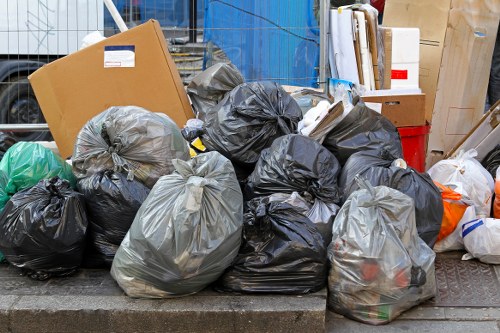
![A close-up view of multiple large white plastic bags filled with waste material, tightly knotted at the top, situated outdoors on a paved surface. The bags appear to contain light-coloured refuse, possibly paper or textile items, and are arranged in a neat, orderly manner, covering a section of driveway or street. The background shows more bags, suggesting a waste collection or clearance activity associated with rubbish removal services. The lighting suggests daylight, with natural shadows highlighting the texture and creases of the plastic. The scene is indicative of a waste collection process, typical of operations carried out by companies such as Barnes House Clearance, serving local areas around [POSTCODE] or [TOWN], prioritizing recycling and sustainability efforts in the community.](/pub/_photos/rubbish/f1390628864.jpg)
How we operate in local boroughs
Barnes House Clearance works closely with local authorities and follows boroughs' approaches to waste separation: food waste collections where applicable, dual-stream or single-stream mixed recyclables, and careful separation of bulky waste. We mirror those systems during clearances to make materials ready for transfer to the correct stream at local facilities. Our teams are trained to respect local sorting rules so that glass, paper, card, textiles and electricals are handled in line with municipal standards for a sustainable rubbish area.We have established relationships with nearby transfer stations and recycling centres to ensure fast, compliant processing. Typical destinations in our network include municipal transfer stations, specialist electronic waste depots and dedicated textile sorting centres. In practice that means items are taken for assessment and either recycled, repaired, or prepared for resale — keeping valuable resources out of landfill and supporting a circular approach to house clearance and responsible waste removal.
Partnerships with charities and reuse organisations
One of our most important sustainability levers is redistribution. We partner with well-known charities, community reuse projects and local social enterprises to give items a second life. Beds, sofas, clean furniture, working white goods and usable electricals are offered to charities that run resale shops or community programs. We also support local furniture reuse groups and small charities that collect smaller items for families in need — strengthening the local circular economy around sustainable rubbish management.To further support reuse, we operate an internal triage system. Items that can be refurbished are routed to refurbishment partners; materials that can be split and recycled are sent to the correct streams at transfer stations; hazardous items and certain electronics are handled by certified e-waste processors. This structured routeing is what transforms a standard clearance into an eco-friendly waste disposal area service and improves our recycling & sustainability outcomes.
Transport is another critical factor in reducing emissions from clearances. Barnes House Clearance deploys a modern fleet prioritising low-carbon vans and vehicles. We use fully electric vans for inner-borough work where charging infrastructure permits and ultra-low emission diesel or Euro 6 compliant vehicles for longer trips. This means a lower carbon footprint per clearance and supports our promise to deliver a greener sustainable rubbish area service across urban and suburban routes.
 We also audit and report on carbon performance. Each job records mileage, vehicle type and estimated emissions so we can identify opportunities to switch to electric vehicles or to optimise routing and consolidation. The result is measurable progress: fewer journeys, smarter logistics and an advancing low-carbon fleet that complements our recycling percentage target and circular resource priorities.
 Materials we divert and how we separate them
- Paper, card and mixed recyclables — prepared to borough-specific kerbside standards where required
- Textiles and clothing — routed to local textile banks and charity partners
- Furniture and bulky items — assessed for reuse, then to charity or specialist recycling
- WEEE (electricals) — processed at licensed e-waste facilities
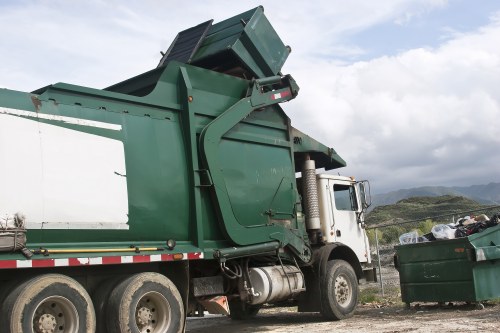
- Metals, timber and inert materials — taken to the appropriate transfer station for recycling or recovery
Our commitment to recycling and sustainability includes education and transparency. We provide clients with a clear breakdown of how items will be handled and publish anonymised performance metrics showing waste diversion and carbon reductions. While we don’t offer public guides on policy, our operational transparency ensures customers understand the environmental impact of their clearance and the positive role of a professional, eco-conscious removal service.
Continuous improvement is central to our culture. We conduct regular reviews of local transfer stations, check charity partnerships for capacity and quality, and update vehicle choices as low-emission options become viable. Feedback from borough recycling authorities and reuse partners helps refine how we classify materials and improves our ability to meet and exceed the 75%+ recycling target set for our eco-service areas.
Choosing Barnes House Clearance means selecting a company that treats waste as a resource. Our integrated model — combining on-site sorting, charity partnerships, licensed transfer station usage and a low-carbon van fleet — creates a genuine sustainable rubbish area offering. We believe that responsible house clearance can set a local standard: reducing landfill, cutting emissions and returning useful items to the community while steadily improving recycling outcomes across the boroughs we serve.